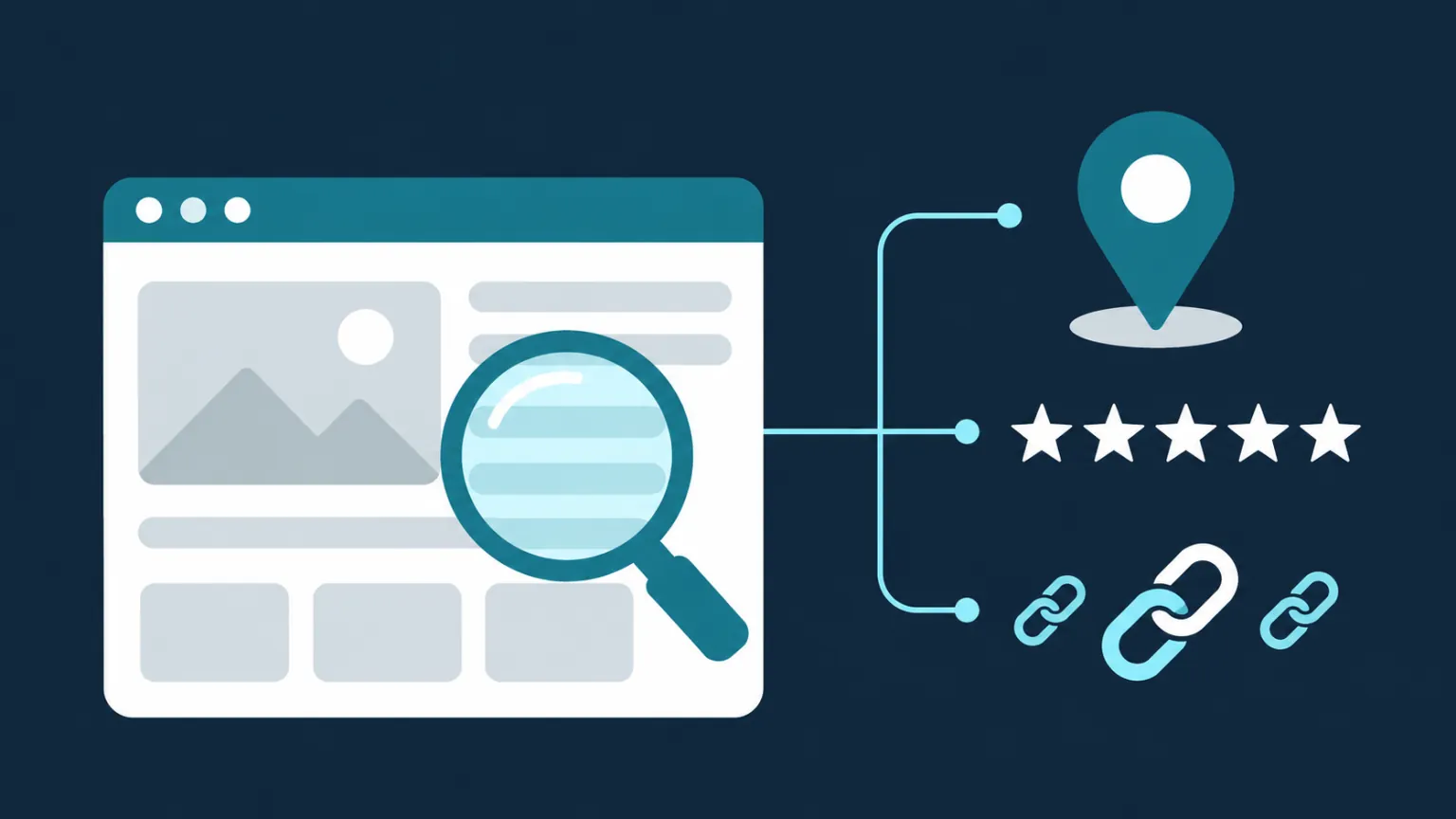
The difference between on-page and off-page SEO is where the work happens. On-page SEO is the work you do on your website: useful pages, clear titles, internal links and content that answers a customer’s question. Off-page SEO concerns your presence beyond the website, including relevant mentions, earned links and business listings.
A local business usually needs both. But earning more links won’t fix a page that doesn’t explain your service, and publishing more pages won’t correct the wrong phone number on a business listing. Start with the problem your customers are actually running into.
What counts as on-page SEO?
On-page SEO helps visitors and search engines understand a particular page. It starts with the service, product or question the page is meant to cover, not with a target number of keyword repetitions.
- Give the page a descriptive title and one clear main heading.
- Explain what you offer, who it is for and what someone should do next.
- Answer the questions a customer needs resolved before contacting you.
- Link to related services and articles where those links help the reader.
- Use meaningful image descriptions when an image conveys information. Leave purely decorative images with empty alt text.
- Write a useful meta description rather than a string of keywords.
For example, a Denver business offering website design needs a service page that explains the work and the buying decision. Repeating “Denver website design” in every paragraph makes the page harder to read without answering any more questions.
What counts as off-page SEO?
Off-page work helps people discover and evaluate your business away from your own site. Relevant business listings, independent coverage and links earned through useful work can all play a part.
When budgeting for on-page and off-page SEO, don’t confuse the off-page work with buying a large package of directory submissions. A listing in a directory your customers use may be worth maintaining; a listing on an unrelated site with incorrect details is not useful just because it includes a link.
Start with real relationships: professional associations you belong to, community projects you actually support, suppliers and partners, and publications interested in work you can substantiate. Don’t invent partnerships or ask for keyword-stuffed links. A credible mention should make sense to a person who never thinks about SEO.
Where does technical SEO fit?
Alongside on-page and off-page SEO, technical SEO provides the foundation beneath the content. It covers whether search engines can reach the pages you want indexed and whether the site delivers those pages reliably.
Check important URLs for broken links, accidental noindex directives, incorrect canonical URLs and redirect chains. Make sure the mobile page is readable, images load and visitors can use the navigation. Submit a sitemap containing the canonical pages you want discovered; a sitemap does not guarantee indexing.
Technical work needs maintenance. A website redesign, deleted service or changed URL can introduce a problem after the original website build. Our guide to fixing broken website links explains one common source of trouble.
On-page and off-page SEO: what should a Denver business prioritize?
For a business serving Denver, first make sure the website describes the actual services and service area. Don’t add a Denver office address unless there is a real location that can truthfully be represented that way.
Then check your eligible business profiles and important listings. Your business name, address where appropriate, phone number, hours and website should be accurate. Check each platform’s eligibility and address-display requirements; a service-area business may need to hide a residential address.
If you need help choosing the work that fits your business, our Denver SEO services page explains how we can help.
A sensible order for the work
- Fix access and usability problems. Repair important broken links, missing images and navigation problems before promoting those pages.
- Improve the pages that support real services. Make the offer, supporting information and contact path clear.
- Correct essential business listings. Resolve inaccurate details and duplicate profiles instead of submitting everywhere.
- Answer narrower customer questions. Link those articles back to the service or decision they support.
- Earn relevant attention. Share useful work with people and publications for whom it is genuinely relevant.
- Review what changed. Use search and inquiry data to choose the next useful improvement.
The order in which you tackle on-page and off-page SEO can change when there is a clear problem. An established company with a strong website but inaccurate listings needs different work from a new business with no useful service pages.
How do you know whether it is helping?
To assess on-page and off-page SEO, record a baseline before changing the site. Search Console shows search queries, page performance and indexing information. Use your analytics and inquiry records to understand which pages lead to meaningful actions.
Review those measures together. More impressions with no relevant visits may mean the page is appearing for the wrong questions. More visits with no inquiries may point to the offer, audience or contact path. A plugin’s content score can help you spot an omission, but it does not measure rankings or revenue.
Keep a short change log with dates and affected URLs. Search results also change for reasons outside your control, so don’t attribute every movement to the last edit or promise a ranking by a particular date.
Do you need on-page SEO or off-page SEO first?
If important pages are missing, confusing or technically inaccessible, start there. If the website already answers customers’ questions well, check how accurately and credibly the business is represented elsewhere. Most ongoing plans include both on-page and off-page SEO rather than treating either as a one-time purchase.
For the listing side, read our guide to choosing useful local business directories. If you need help deciding what to tackle, tell us about your website and Denver SEO needs.
Your practical checklist for on-page and off-page SEO
Start with useful pages
Explain the real service and answer the questions a customer needs resolved.
Connect related ideas
Link supporting articles to the service page they genuinely help explain.
Keep listings accurate
Check your name, contact details, hours and eligible service area.
Check the foundations
Repair important broken links, image failures and indexing mistakes.
Earn relevant attention
Use real work and genuine relationships rather than bulk link packages.
Measure useful outcomes
Review search queries, relevant visits and genuine inquiries together.